Brand stories that makeyour
competitors go “Oh Sh*t!”
You've spent years being the best-kept secret in your market. We
turn your complex processinto a
visual story that finally makes you look as
good as you actually are.
ScreenSpace's codified system that
1
extracts the genius trapped inside a company,
2
turns it into a visual story buyers instantly understand, and 3
gets it in front of every buyer who matters.
Three pillars.
Three outcomes. One promise:
Category of One.
No other company will have
your story,
your visual presence, and
your visibility in the market.
Introducing ScreenSpace
The buyer's journey, evolved.
Every company has a story worth telling. We turn yours into an
interactive experience buyers actually understand and remember.
Discovery
Evaluation
Decision
Visibility
From invisible to unforgettable
Buyers can't choose what they can't understand. We
turn your expertise into a visual story they can explore on
their own time.
Before – Buyers skim your
site, scan a PDF, and forget you by lunch.
After – They understand your
value before anyone picks up the phone.
"People finally get what we do."
Stop competing on price. Start winning on value.
Buyers compare you to cheap alternatives. We show them what
makes you better – so the comparison stops making sense.
Before - Your proposal looks identical
to the cheaper option.
After – The difference is so clear,
price stops driving the decision.
"Buyers trust us before we even get on a call."
Close deals with confidence
Your champion can't sell for you when you're not
in the room. We arm them with a compelling story the whole
team rallies behind.
Before – Your champion fights for
you with a PDF and a prayer.
After – The buying committee visualizes
the outcome without you in the room.
"The deal was done before the final meeting started.”
Build market authority beyond your local reputation
Your best work only travels as far as your network. We turn
it into a system that puts your story in front of every
buyer who matters – and keeps it there.
Before – Growth stops where your
personal network ends.
After – The right buyers find you
before you find them.
"[They] have a 6th sense when it comes to storytelling and
design."
Open review
"I’ve tried other demo tools... none have come close to
this experience.”
Open review
"Turned our reps into rockstars... Every prospect is blown
away.”
Open review
"They’re willing to dig in and work right alongside you...
[such] an amazing team!” Open review
"We spent 18 months trying to visualize our process.
Thrilled how it came out."
Keenan • CEO
🩷
💜
💜
"ScreenSpace brought our system page to life and was an
absolute blast to work with.
They have a talent for grasping complex models and simplifying them."
Wes Bush • CEO at ProductLed
"We can finally have targeted conversations with inbound
leads based on their engagement.
Leigh Clancy • Dir. of Product Marketing
Your Playbook
How it works
Five weeks. Three sprints. One complete transformation.
1
Narrative Design
2
Visual Design
3
Visibility Engine
First, we shape your
Story.
A two-hour workshop that pulls the genius out of your head and
turns it into a story your whole team can tell.
Workshop: We unpack your
buyer's world, founder story, and brand voice.
Story Build: We visualize your story
through interactive content your team can rally behind.
The Hero
The Problem
The Solution
The Current World
The Better World
The Current World
The Problem
The Broken World
The Solution
The Better World
Then, we bring it to
life.
We turn your narrative into an interactive experience buyers
click through in minutes.
Storyboard: We map your story
to visual scenes and persona paths.
Build & Package: We build the
full cinematic experience – then package it into shareable assets.
Kelly, the User
Jason, the
Manager
Alexa, the
Decision Maker
Kelly
starts her journey...
Select Journey
Process Map
Book a Demo
The Problem
COI Timeline
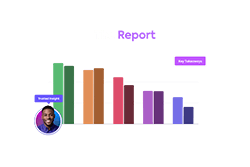
Report
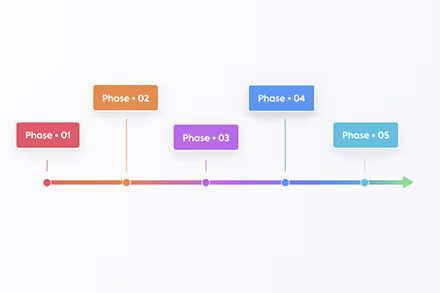
Timeline
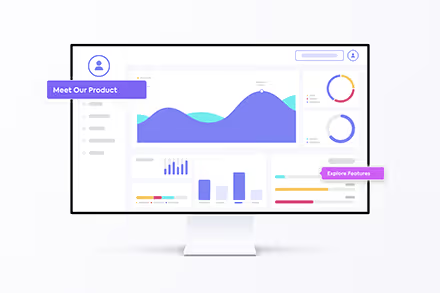
Product Demo
Case Study
Book a Demo
Finally, you get to Own It.
Your new superpower. After hand-off &
training, the ScreenSpace platform becomes your new home base.
Platform: Launch new stories,
update existing ones, and tailor every experience in
seconds.
Measure: See who's engaging and
what they care about before your team picks up the phone.
Explore Our Offering
Meet Our Product
Explore Features
Edit mode
Capture Leads
Reveal and activate high-intent leads with real-time
alerts.
Lauren Davis • Website Hero
11:48 am
Jenna Smith • Leave Behind
11:45 am
Ben Thompson • Conference Booth
11:42 am
Max Williams • LinkedIn Campaign
11:40 am
Measure Performance
See what actually drives pipeline across key messages,
visuals, and journeys.
40k
30k
20k
10k
0k
Jan
Feb
Mar
Apr
May
June
Track Interactions
Understand what your buyers care about most and why.
2,043
TOTAL VIEWS
4.3m
ENGAGEMENT TIME
45%
CONVERSION RATE
Website Hero
143 Visitors
24%
Leave Behind
122 Visitors
48%
Product Demo
87 Visitors
22%
Buyer Insights
Understand Buyer Intent
Use signals to reveal which messages, visuals and
journeys buyers care about — and why.
Who We Are
Darren viewed
Storypoint
for 3.15m
10:48 am
Video Watched
10:48 am
Scene Viewed
You viewed
Product Tour
for 4.15m
10:48 am
Buyer
Press K to interact
Press K to interact
Hook
Value Story
Process Map
Product Demo
Customer Story
Call to Action
See it in action
Your buyers grasp the full story with
One Sharable Link.
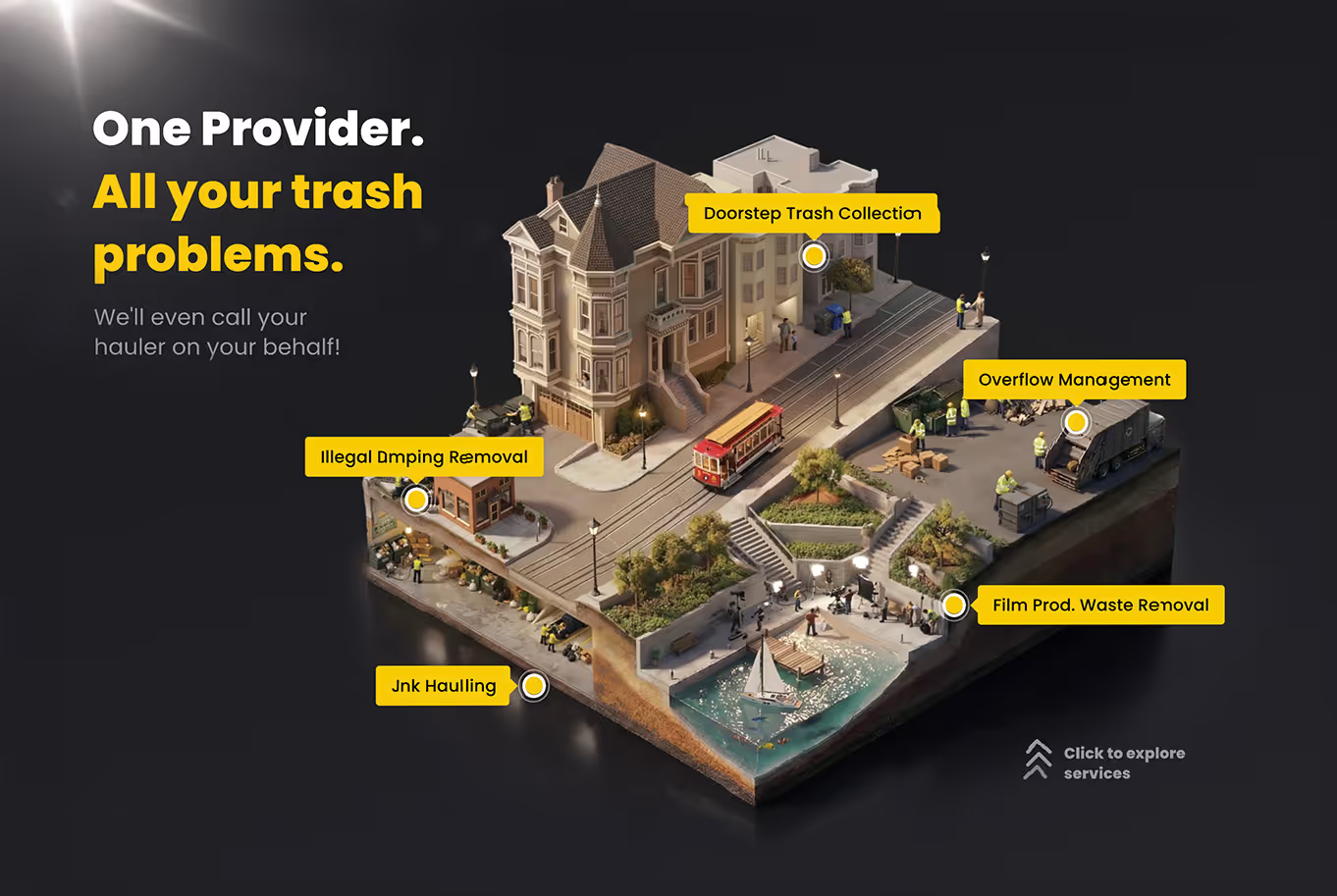
Most of our clients aren't tech companies. We specialize in
services, industrial, and professional firms where the real value is
hard to see from the outside – mechanical contractors, waste
management, engineering, consulting. The less "sexy" your
industry, the bigger the advantage when you finally show your work
the way it deserves.
We've never had a marketing team. Where do we even start?
That's exactly who the Narrative Foundation was built for. In
two weeks, we extract the pitch that's been living in your head
and turn it into a story your whole company can use – on the
website, in proposals, at trade shows. No marketing team required.
You start with the story, then decide how far to take it.
Who's behind ScreenSpace?
ScreenSpace is run by identical twin brothers Darren and Adam Fanton
– a CEO with 20 years of agency and Hollywood creative experience,
and a creative director who's designed for Netflix, Disney, and
DreamWorks. Every client works directly with senior creative
leadership, not junior account managers. That's by design, and
it's why we cap new clients at two per month.
What if I already have a website I like?
We're not a web design agency. Most of our clients keep their
existing website. What we build is the narrative and visual story
layer that sits on top of it – interactive experiences that embed on
your site, live in proposals, get shared in emails, and travel with
your sales team. Think of it as giving your website a voice, not a
facelift.
What's a ScreenSpace "Story" and how is it different
from a video?
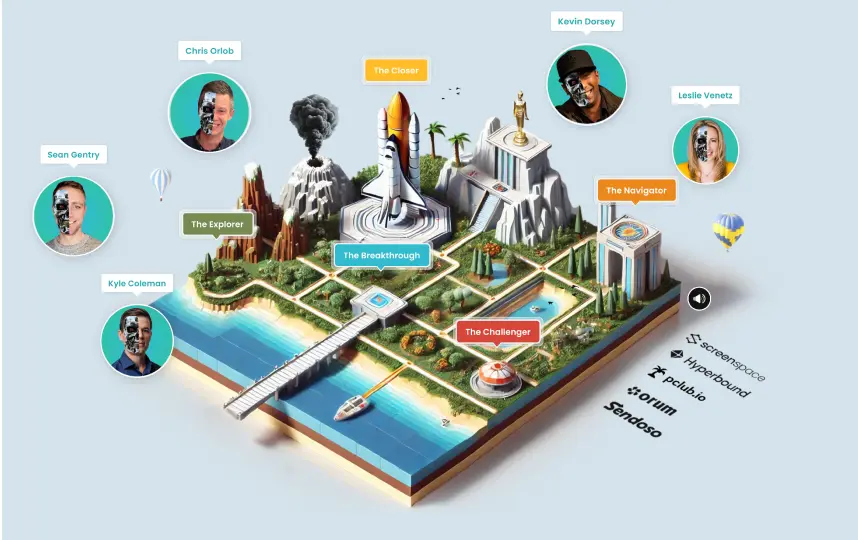
A Story is an interactive web experience your buyers click through
at their own pace –
like this. Unlike video, it adapts to different buyer personas, tracks
engagement by individual viewer, and captures leads through built-in
forms. Think of it as a two-minute version of your best sales
conversation that runs 24/7.
How long does it take to see results?
The Narrative Foundation delivers a complete strategy in two weeks.
The Visual Story ships a live interactive experience in six weeks.
Most clients report that within the first month of launch, their
buyers are arriving to sales calls with a clearer understanding of
the value – which shortens cycles and reduces wasted proposals.
How much of my time does this actually take?
Two hours live. That's it. Before the workshop, you'll
spend about 30 minutes on a self-guided intake – just enough so
we're not starting from zero. The two-hour workshop is where we
shape the story together. Everything after that is async: we
produce, you review. The full Narrative Foundation wraps in two
weeks. The full Visual Story wraps in six. Most clients tell us it
was the most productive two hours they've spent on their
business in years.
What kind of results should we expect?
Buyers arrive to sales calls already understanding your value –
which shortens cycles, eliminates wasted proposals, and lets your
team close deals on the strength of the story alone. Most clients
see more qualified pipeline within the first month of launch, and
the compounding effect grows as you add stories across more
touchpoints.
When should I consider ScreenSpace?
Most companies consider a visual storytelling partner when
they're approaching a rebrand, launching a new service, making
a first marketing hire, or realizing their website looks identical
to their competitors'. The deeper signal is the gap between how
good you are and how good you look – if buyers are confused, sales
cycles are long, or every deal still requires a custom explanation
from scratch, that's the trigger.
Why do we keep losing deals to competitors we know we're better
than?
In most cases, the issue isn't quality – it's clarity.
When every company in a market uses the same language and the same
website structure, buyers default to the cheapest option or the one
they heard of first. The companies that win are the ones whose value
is visible before the first call. That usually means showing your
process, not just describing it.
Our website doesn't explain what we do. How do we fix that?
Most B2B websites fail because they describe features instead of
outcomes, or use internal language buyers don't recognize. The
fix starts with narrative clarity – defining who you help, what
changes for them, and why your approach is different. From there,
visual storytelling (interactive walkthroughs, process maps, case
studies) replaces the wall of text with something buyers actually
engage with.
How do I use storytelling to sell a complex B2B service?
Start by documenting the narrative your best clients already respond
to – the problem you solve, the process that makes you different,
and the outcome that changes their business. Then turn that into
visual, shareable assets: an interactive walkthrough of your
process, a case study that shows the transformation, and a clear
buyer journey map. Most services companies already have a great
story – it's just trapped in the founder's head or
scattered across a dozen sales conversations. The companies that win
are the ones who package it into something a buyer can experience
without rebuilding the pitch from scratch every time.
What industries use visual storytelling agencies?
Visual storytelling firms typically work with B2B companies whose
value is hard to see from the outside – mechanical contractors,
waste management, engineering, industrial services, consulting, and
professional services. These are industries where the real expertise
lives in the process, not the product, and where a generic website
makes everyone look identical. Tech and SaaS companies also use
visual storytelling, but the biggest impact tends to show up in
"unsexy" industries where competitors haven't
invested in it yet.
Do small B2B companies really need a creative agency?
Not all of them. If your sales process is simple and your buyers
understand what you do on first contact, you probably don't.
But if you're losing deals because buyers can't see your
value, if your website looks like every competitor's, or if the
only way you win deals is explaining it live, one conversation at a
time – that's a storytelling problem, not a headcount problem.
An agency that specializes in narrative and visual design can solve
it faster and cheaper than a full-time marketing hire.
How is this different from hiring a freelancer or a traditional
marketing agency?
A freelancer can design a page or write copy, but they won't
build the underlying narrative that ties everything together. A
traditional agency will run campaigns, but most don't
specialize in extracting complex expertise and making it visual.
ScreenSpace sits at the intersection – narrative strategy, cinematic
design, and an interactive platform – which means you get the
thinking and the production in one team, not three separate vendors.